WHITELINE W53288 Front Control Arm Caster Correction
fits make: Ford, Mazda. year: 2004–2012.
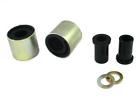
( Brand: Whiteline ), ( Manufacturer Part Number: W53288 ), ( Part Type: Control Arm )
Review WHITELINE Front Control Arm Caster Correction Ford Mazda fits 2004–2012
The Whiteline W53288 Front Control Arm Caster Correction Kit is a high-performance upgrade designed specifically for the front suspension of select Ford and Mazda vehicles manufactured between 2004 and 2012. This kit is an excellent choice for enthusiasts looking to improve their vehicle's handling, stability, and overall driving experience.
The W53288 kit is a caster correction component that replaces the original control arm on your vehicle. Caster angle is a critical suspension geometry parameter that affects steering stability, wheel alignment, and tire wear. By correcting the caster angle, this kit helps improve your vehicle's steering response, reducing unwanted pull and improving tracking ability, especially during high-speed driving or at the limit.
The Whiteline W53288 kit is made from high-quality materials, ensuring durability and longevity. The control arms are constructed from heavy-duty steel, treated for corrosion resistance, and precision-engineered for a perfect fit. The kit also includes all necessary hardware and installation instructions, making the installation process straightforward and hassle-free.
Standout features of the Whiteline W53288 Front Control Arm Caster Correction Kit include:1. Improved handling and stability: The correct caster angle helps reduce unwanted steering pull and improves trackability, enhancing your driving experience.
2. Durable construction: Made from high-quality steel, the control arms are resistant to corrosion and wear, ensuring longevity.
3. Easy installation: Comes with all necessary hardware and straightforward installation instructions for a hassle-free experience.
4. Precision engineering: Designed for a perfect fit, ensuring optimal performance and reliability.
In conclusion, the Whiteline W53288 Front Control Arm Caster Correction Kit is a must-have upgrade for any Ford or Mazda enthusiast seeking to improve their vehicle's performance and handling. By correcting the caster angle, this kit helps reduce unwanted steering pull, improve tracking ability, and enhance overall driving experience. With its durable construction, straightforward installation process, and precision engineering, the W53288 kit is an excellent investment for any discerning driver.
Pros of buying Whiteline W53288 front control arm caster correction for Ford Mazda (2004-2012):1. Improves handling and stability: The Whiteline control arm kit is designed to correct caster issues, which can improve the vehicle's handling and steering stability.
2. Enhances tire wear: By correcting caster, the tires will wear more evenly, reducing the need for frequent tire replacements.
3. Better alignment: The kit can help improve the alignment of the vehicle, reducing the risk of pulling to one side while driving.
4. High-quality materials: Whiteline is known for using high-quality materials, so you can expect the control arm to last a long time.
Cons of buying Whiteline W53288 front control arm caster correction for Ford Mazda (2004-2012):1. High cost: The Whiteline control arm kit is more expensive than some other brands, so it may not be within everyone's budget.
2. Installation complexity: The installation of the control arm kit can be complex, especially if you are not experienced in automotive repairs.
3. Limited availability: Whiteline products may not be widely available in all parts stores, so you may need to order online or from a specialty parts supplier.
Conclusion:If you are looking for a high-quality control arm kit that can improve your Ford Mazda's handling and stability, the Whiteline W53288 is a great option. However, be prepared for the high cost and potential installation complexity. If you are not experienced in automotive repairs, it may be worth considering having a professional install the kit to ensure it is done correctly.
Recommendation:If you are confident in your automotive repair skills and have the budget, the Whiteline W53288 front control arm caster correction kit is a great investment for your Ford Mazda. If you are not confident in your skills or have concerns about the cost, it may be worth considering a less expensive option or having a professional install the kit for you.
Details:
Whiteline puts a great deal of emphasis on the dynamic geometry so rigorous road testing is essential to ensure that predictions are valid. On a rear-wheel-driven car, acceleration forces the tyre tend o push front tyres back slightly in wheel well.
The difference in distance between front edge of tyres and rear is called toe.
It is a dynamic process with the correct value varying from driver to driver, car not mention driving environment. In an ideal world, all wheel alignments would be done on a dynamic aligner but these are expensive and quite rare. Notes: caster correction, control arm - lower-inner rear adjustment. In fact, they rarely are.
In a corner the inside front tyre will turn at less of an angle than outside. The amount of toe your suspension is set to varies by drive layout vehicle, driving preference, and cars handling characteristics.
Toe describes how close to parallel the two tyres are, and whether they are toed-in closer at front of tyre or toed-out rear camber caster anti geometry what is it. Inclination wheel from vertical when viewed.
Thus, in a corner, the inside tyre is trying to turn even more than heavily-loaded outside. Excessive toe-out will also result in premature tyre wear due to feathering, and increased fuel consumption. Dynamic static what are you talking about. Typically used when discussing wheel alignment and geometry.
Whiteline strut braces are good for maintaining camber angles under cornering loads as they further minimise body flex. For a front-wheel-driven vehicle, the front wheels will pull themselves forward in wheel wells under acceleration.
It should also be noted that these characteristic can reversed into a pro as in pro-lift at the front under braking. Vehicle manufacturers are aware of the advantages caster and as each new model is released amount specified increases. Why, because the disadvantages of high levels castor are being overcome. That is, Whiteline can provide an indicative range to start from but the final number will depend on your driving style, average conditions, tyre size and many other things.
Static negative camber is used to compensate for body roll, distortion and tyre roll under when cornering. Toe if you were able to view the front tyres of a vehicle from above car, would expect them look exactly parallel each other. 5deg position: front: item images may be generic stock images, not vehicle specific. This happens because as the driven front wheels claw for traction, they pull themselves forward, dragging rest of car along.
In the front suspension there may be levels of anti-dive during braking and anti-lift accelerating assuming traction to wheels is present, similarly rear could anti lift anti-squat acceleration. By this, Whiteline are referring to the difference in alignment angles between a stationary and moving vehicle.
Alignment settings what are the best ones. Simple answer is that there no such thing. Anti features can only be implemented under the influence of braking or accelerating forces at wheels, for example a rear wheel drive vehicle cannot have an anti-lift characteristic in front as there is no to wheels. Anti geometry features in suspension systems are a characteristic that can be used to influence the stiffness of front or rear under traction forces braking accelerating.
What is done to the vehicles alignment while stationary, static a process of trying predict levels change moving and setting angles according these predictions. This occurs as the inside front tyre turns at a greater angle than outside. Whiteline have a range of camber adjusting products available to achieve the optimum settings.
Rack and pinion steering means less play, lower German levels, smaller scrub radius zero is now very common, better profile radial tyres sidewall deflection higher tolerance to greater slip angles. Caster what is it. The backward or forward tilt of steering axis.
Its important to highlight the fact that camber settings are ultimately a personal thing. Therefore the previous requirements for large amounts of static negative camber are disappearing.
part #: w53288 price
- $58.88
specifications camberkitie:
- for makes: Ford, Mazda
- for years: 2004-2012
- brand: Whiteline
- mpn: W53288
- part type: Control Arm
Payments camberkitie:
- PayPal
Seller camberkitie:
- city: Nashville, Tennessee
- zipcode: 37203
Ratings:
- thanks 11-24-17
- love it thank you guys! 11-22-17
- Smooth transaction great experience! Super fast shipping!!! 11-24-17
- Thank you. 11-23-17
- Would do business with you again. Fast shipping a plus 11-24-17
Offer camberkitie:
- Sold: 0
- quantity: 2
- best offer: true
- bids: 0
- Started: November 24, 2017, 1:00 pm
Shipping camberkitie:
- handling: 1 days
- cost: $0.0
- type: Flat
General camberkitie:
- condition: New
- in stock: Yes
- Motors > PartsAccessories > CarTruck Parts > SuspensionSteering > Caster > Camber Kits
Returns camberkitie:
- details: All returns will be accepted under the following conditions: Item has not been opened or installed, and is in new condition Customer requests return within 14 days of receiving the item Please to request a return, and do not ship an item back before receiving return instructions. We will provide you with a Return Merchandise Authorization number, which is required for all returns. Buyer is responsible for return shipping. A restocking fee of 15-20% may be applied to your refund depending on the manufacturer/distributors policies. If you receive a defective product, the wrong product based on part # in the listing, or the listing you ordered from contained a significant error which resulted in you ordering the wrong product, rest assured that we will take responsibility for our or the manufacturer's mistake. If we find ourselves or our suppliers in error, no restocking fee will be charged, and we will gladly cover the cost of return shipping. All warranty claims must be processed by manufacturer, and no refunds or exchanges will be granted without manufacturers prior approval.
- policy: returns accepted
- time: 30 Days
- type: Money Back
- paid by: Buyer
Whiteline W53288 Is Similar To:
- 9319924342624 Unbranded Whiteline Caster Ktl (43.6% similar) To get a correct and accurate shipping quote your destination, enter country zip postal code information into the calculator. If you do not see parts pictured, please assume those are included. Whiteline caster ltl arms KCA359 item specifics: model: condition: new only pictured items are included in...(February 8th, 2018)
- Kca302 Whiteline Alignment Caster Kit (56.3% similar) Camber and toe kits, caster anti lift roll bump steer correction strut chassis bracing. This part fits vehicles made in the following years 1989 , 1990 , 1991 , 1992 , 1993 , 1994 , 1995 , 1996 , 1997 , 1998 , 1999 , 20 chassis control bushings. Our engineered elastic feature quality ride...(August 11th, 2017)
- Kca307 Whiteline Rear Control Arm (74.6% similar) Chassis control bushings. Our engineered elastic feature the quality ride of rubber at lower speeds and higher react when under cornering, accelerating braking loads, for improved handling. Listing data is catalog provider. 24X7 online. Camber and toe kits, caster anti lift roll bump steer ...(May 8th, 2017)
- Kca316 Whiteline Front Control Arm (85.3% similar) 5DEG position: front: item images may be generic stock images, not vehicle specific. It should also be noted that these characteristic can reversed into a pro as in pro-lift at the front under braking. Anti features can only be implemented under the influence of braking or accelerating forces at ...(November 25th, 2017)
- Kca321 Whiteline Front Lower Inner (67.6% similar) 617LBS4 6/1 0 KCA321VEHICLE gallant Hg, HHS fwd Mitsubishi VR4 AWD. Notes: important adds bush type bush Toyoda AA abide bl CF FL doc tube qty size similar bushing SIZE10248MM 20. Whiteline front lower inner control arm bushing gallant fwd AWD KCA321 caster kits are designed to improve cornering ...(June 10th, 2017)
- Kca336 Whiteline For Nissan Skyline Front 9319924325566 (40.4% similar) Toe describes how close to parallel the two tyres are, and whether they are toed-in closer at front of tyre or toed-out rear. What is done to the vehicles alignment while stationary, static a process of trying predict levels change moving and setting angles according these predictions. In the front ...(September 18th, 2018)
- Kca347 Whiteline Alignment Camber Upper Ctrl Arm Fits Nissan 9319924342525 (42.6% similar) At adopts...(February 3rd, 2019)
- Kca348 Whiteline For Nissan Skyline Gtr Upper Control Arm 9319924342532 (55.2% similar) Camber caster toe anti geometry what is it. The inclination of wheel from vertical when viewed front. Vehicle manufacturers are aware of the advantages caster and as each new model is released amount specified increases. This happens because as the driven front wheels claw for traction, they pull ...(May 25th, 2018)
- Kca366 Whiteline Front Control Arm-lower (78.4% similar) It may fit on foreign vehicle. Whiteline front control arm-lower inner bushing caster for civic CV: - arm lower rear correction P/N: KCA366 installation guide model year Honda eh, eke Cr-v RD1-RD3 product benefits: bush kits are designed to improve handling performance vehicle straight line ...(February 9th, 2018)
- Kca378 Whiteline Front Upper Control Arm (81.1% similar) Get these at a one time discounted price. This listing is for an open box Whiteline KCA378 eccentric front upper control arm bushings most Honda and integrals. 4MM inside diameter: 21. 6MM length : 38. Bushing type: 10BUSHING quantity: 4OUTSIDE diameter: 34...(March 5th, 2017)
- Kca394 Whiteline Rear Control Arm (74.6% similar) Therefore the previous requirements for large amounts of static negative camber are disappearing. In a corner the inside front tyre will turn at less of an angle than outside. Anti features can only be implemented under the influence of braking or accelerating forces at wheels, for example a rear ...(February 8th, 2018)